THE DRAWING INDEX — SHT W
THE WORK, IN WRITING.
A work item is one agreed piece of the build. Not a passing remark in a meeting. A small sheet of its own: its type, its status, the piece of the vision it serves, and the record of how it actually went.
Offline mode that survives a real Saturday at a busy bookstore where the internet just failed.
A WORK ITEM AND THE WORK BENEATH IT. THE REVISION IN THE FOOTER IS THE PART MOST DESIGN TOOLS THROW AWAY.
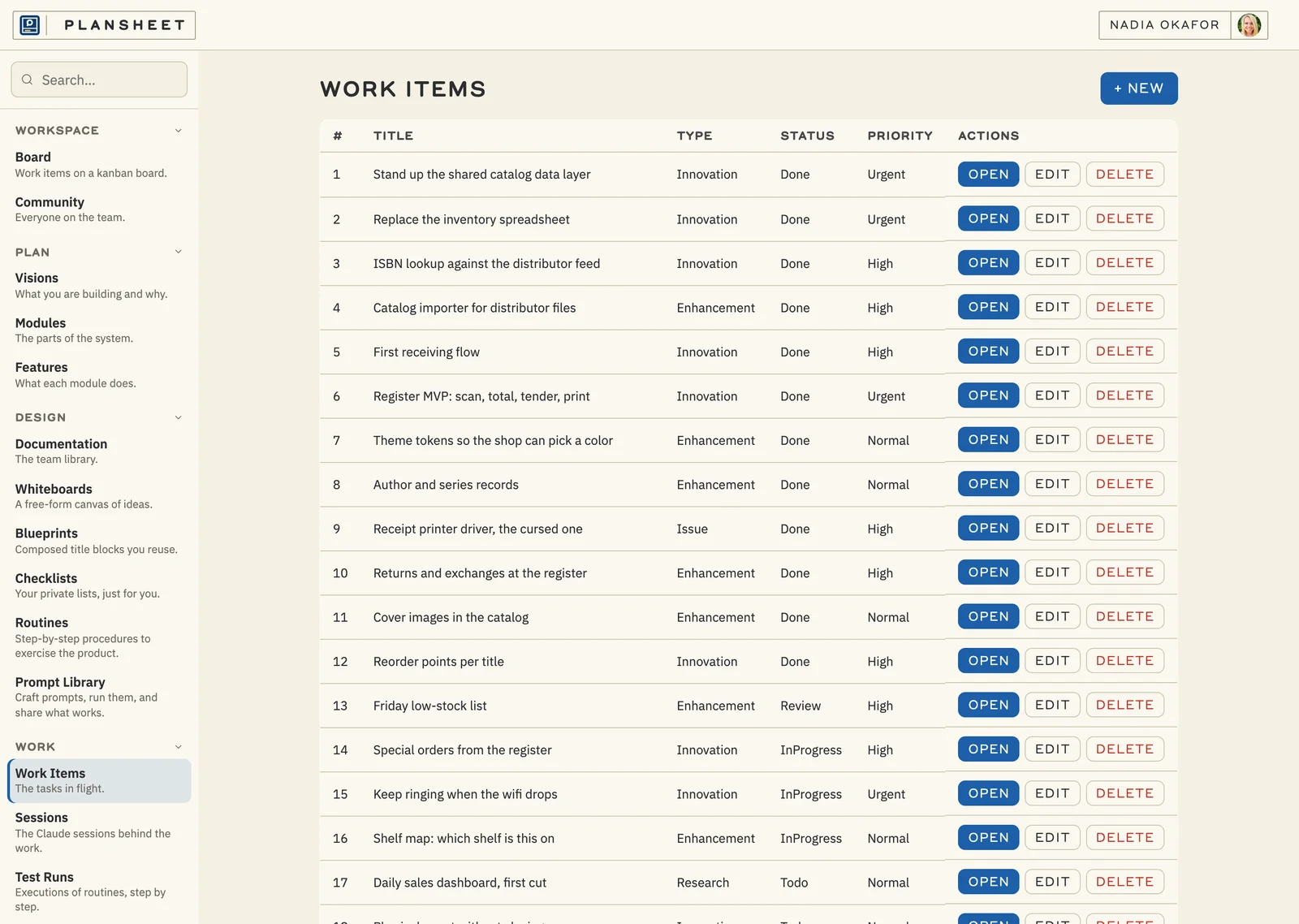
THE ACTUAL WORK UNDER THE PLAN, ACROSS A WHOLE TEAM.
FROM A SOFTWARE COMPANY ON ONE TABLE ->
EVERY ITEM CARRIES ITS WHY
A work item points back at the thing it serves: a vision, a module, a feature. You can always trace a task to the reason it exists, which means you can also notice when a task has drifted loose from any reason at all. That is usually the moment to stop and look, not to push harder.
This is the difference between a plan and a queue. A queue asks whether the line got crossed off. A plan asks whether crossing it off still serves what you set out to make.
NUMBERED PER SHOP
Every work item gets a number that starts at one for each shop, the way sheets are numbered inside a single drawing set. WI-14 is the fourteenth thing this team agreed to build, and it stays WI-14 no matter how many other tenants are drafting on the same table. You can say it out loud in a standup and everyone knows what you mean.
AND IT KEEPS THE RECORD
Status moves are logged with who moved them. The description is real markdown you can write in, paste images into, and read back formatted. Its linked artifacts, the sessions, the documents, the issues it addresses, gather onto a blueprint you can take in at a glance. Nothing hard-deletes. The sheet remembers what changed, who changed it, and what it looked like before.
A QUEUE TRACKS THE WORK. A SHEET REMEMBERS THE WORK AND WHY.
WHAT A WORK ITEM HOLDS
01
THE AGREEMENT
Title, type, priority, and status. The shape of the work, written down where the whole team can see it and agree on it.
02
THE TARGET
The vision, module, or feature this serves. The thread back to the why, never broken.
03
THE BLUEPRINT
Everything linked to it, gathered onto one title block: sessions, documents, the issues it addresses.
04
THE RECORD
Status history, comments, and every revision, kept. The as-built, not just the as-asked.
THE AS-BUILT, NOT JUST THE AS-ASKED
PUT A PIECE OF WORK ON A SHEET
Agree on the work in writing. Trace back to its why. Keep what happens next.
START DRAFTING BACK TO THE INDEX