EXAMPLES — SHT S-01 — DEEP DIVE
A WHALE, A BOAT, AND A SEA OF BRAINBOWS.
One real commission, drawn the whole way through. It started with two words a customer kept coming back to, whales and brainbows, and ended with a run of stickers and the shirt they asked for the moment they saw them. Here is every step on the table, the way it actually happened.
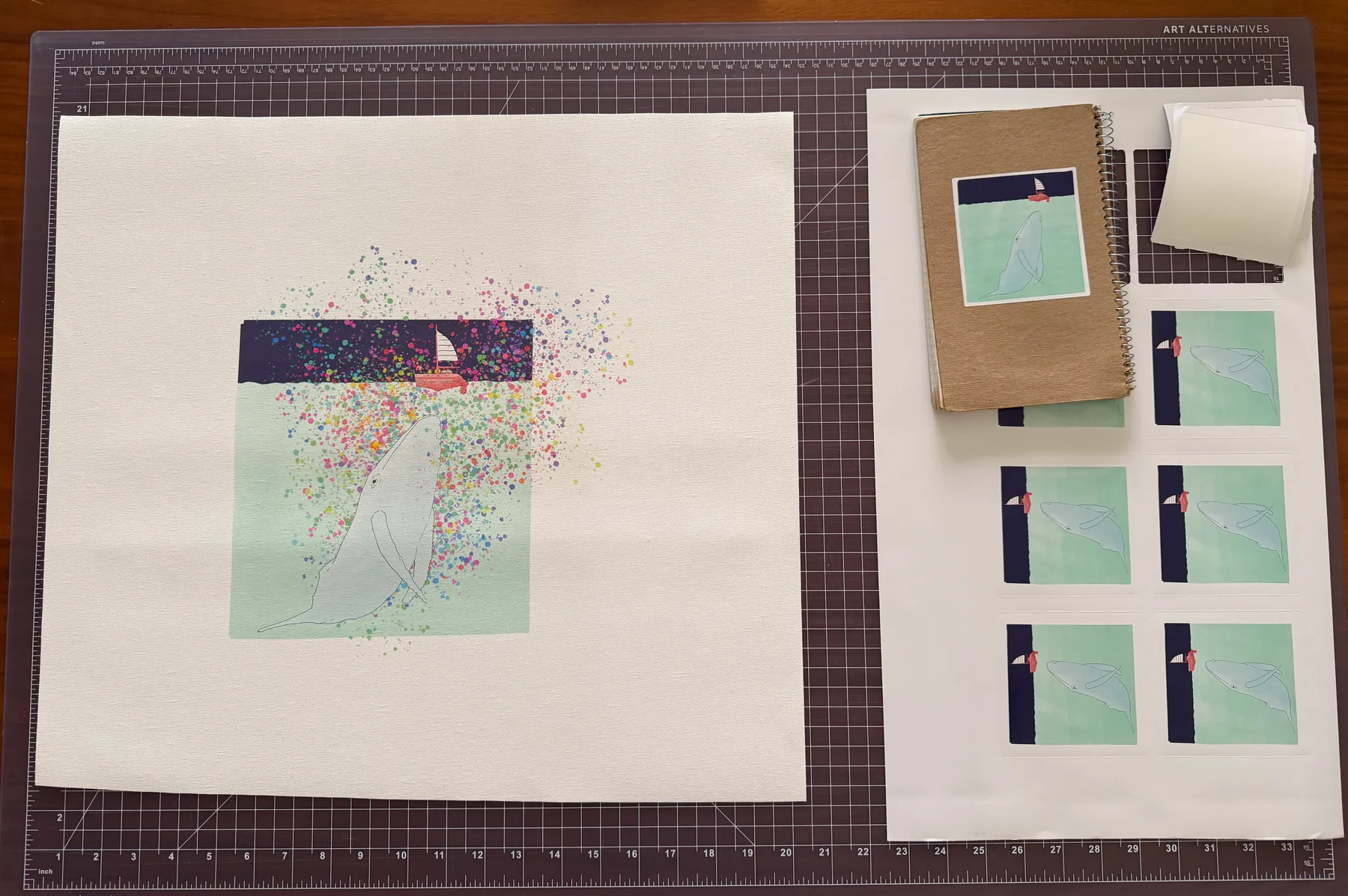
FROM TWO WORDS TO ALL OF THIS: THE STICKERS, THE SHIRT, AND THE NOTEBOOK THEY LANDED ON.
THE BRIEF: WHALES AND BRAINBOWS
Every project starts as a conversation. This one started with two words the customer kept saying: whales, and brainbows. A humpback rising up through calm water, and a burst of color coming off it like a thought you can see. The words went on a board before a single line got drawn, because the words are what every later decision gets checked against.
THE WHOLE COMMISSION, IN THE TWO WORDS IT STARTED FROM.
REFERENCE FIRST
Before drawing anything, the artist pulled reference: how a humpback actually holds itself in the water, how a small sailboat sits on the surface. Good drawing is mostly good looking first. The references went next to the brief so the drawing had something true to push against before it got stylized.


WHAT THE THING ACTUALLY LOOKS LIKE, BEFORE STYLIZING IT.
DRAWN BY HAND, AT A CAFE
The first real artwork was pencil on paper, drawn by hand at a cafe with an iced coffee going warm. Not a tablet, not a trace. The whale got its weight and its eye here, in a sketchbook, the way it would have been drawn a hundred years before software existed.
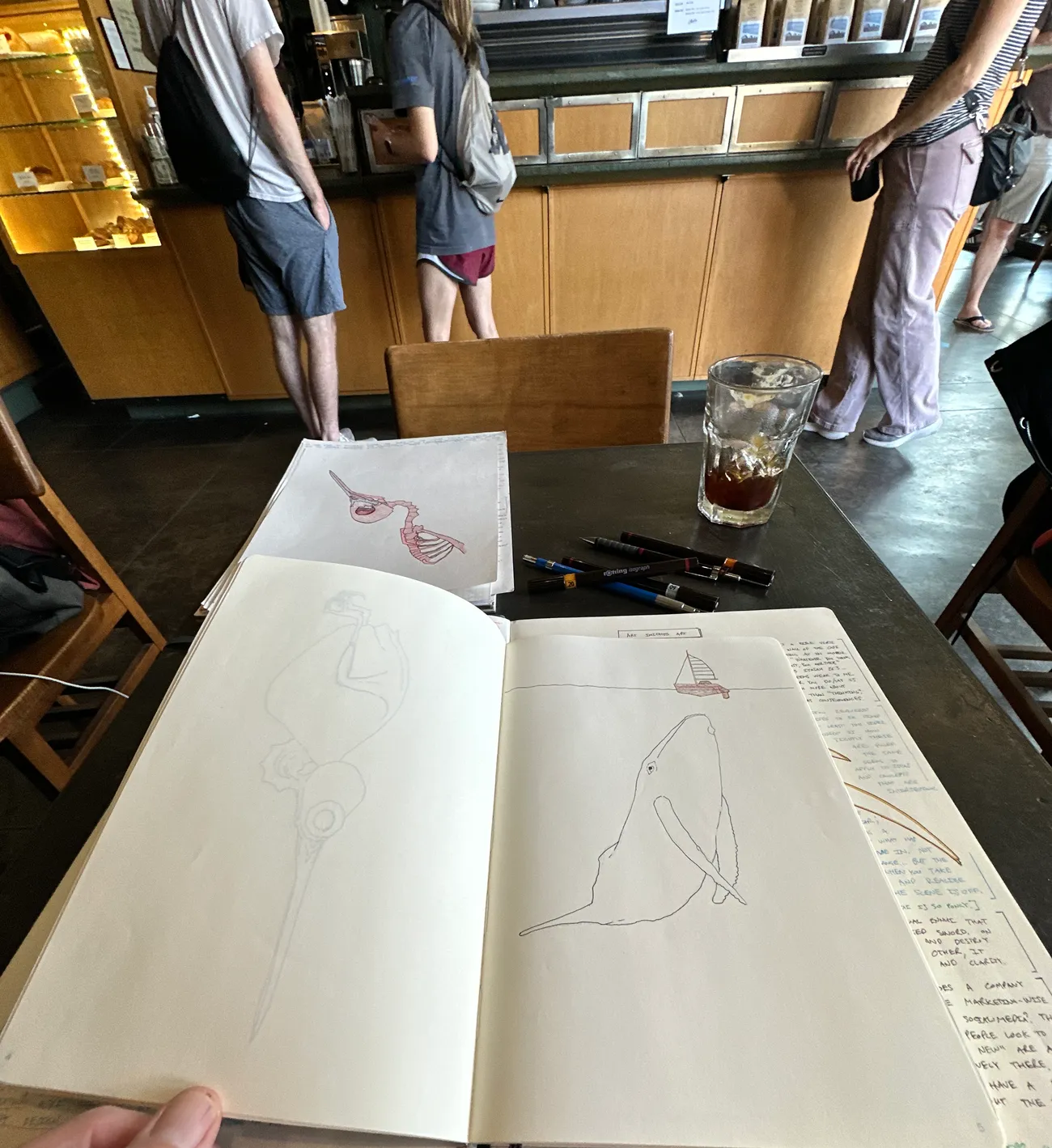
THE WHALE GOT ITS WEIGHT AND ITS EYE IN A SKETCHBOOK.
THE COMP, CHECKED WITH THE CLIENT
The line art came together on the page: the whale rising, the small red sailboat at the waterline above it. Before any color or any time went in, this comp went back to the customer. Agreeing on the drawing first is the cheapest place to change your mind. Once it was approved, the line art was scanned to take it digital.
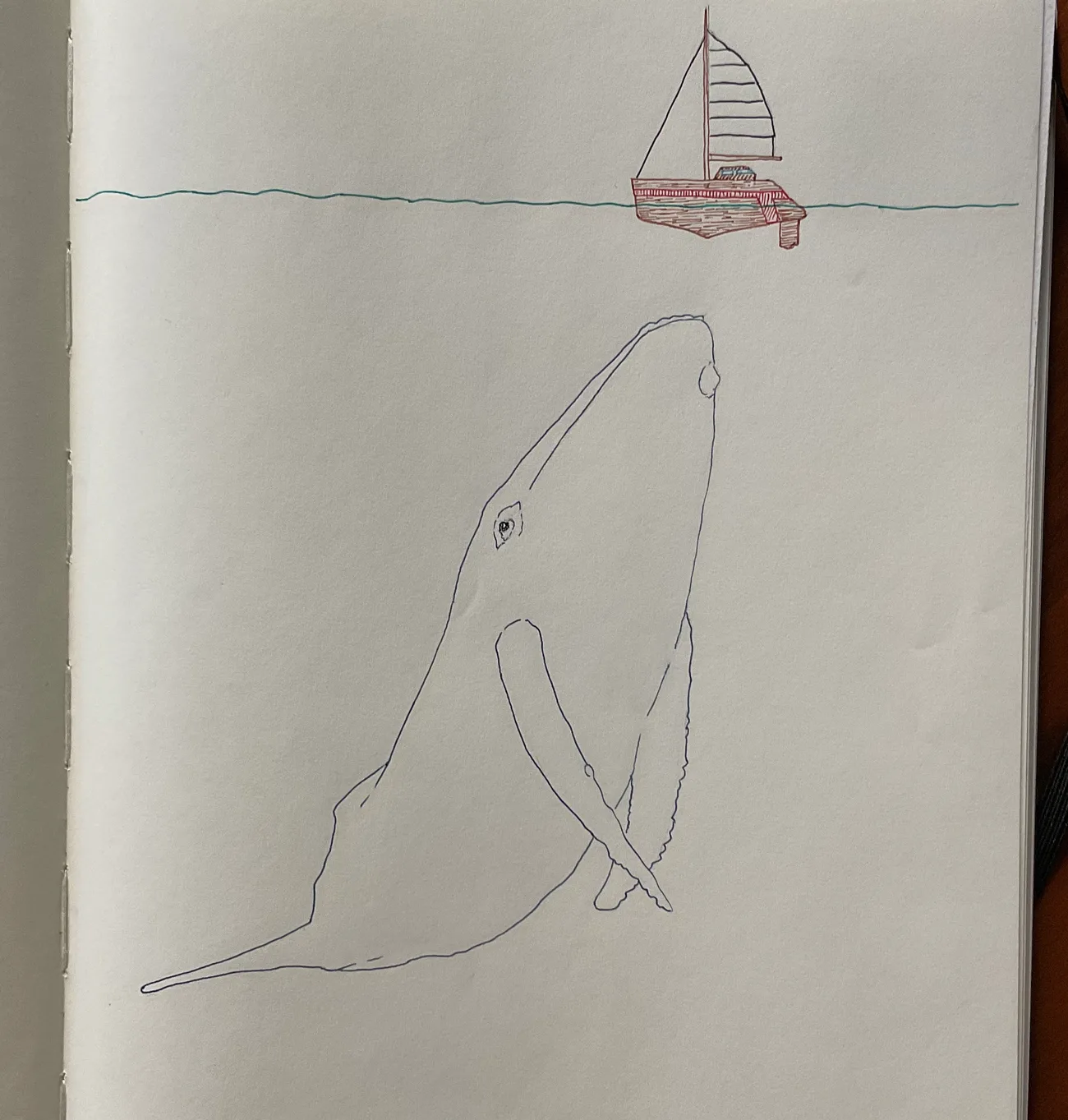
THE DRAWING THE CUSTOMER SIGNED OFF ON, BEFORE A MINUTE OF COLOR.
COLOR IN PROCREATE, AND THE BRAINBOWS
The scan went into Procreate. Flat color first: the calm mint water, the navy band of sky, the coral red of the little boat. The whale stayed pale and quiet, the still point the whole piece hangs on.
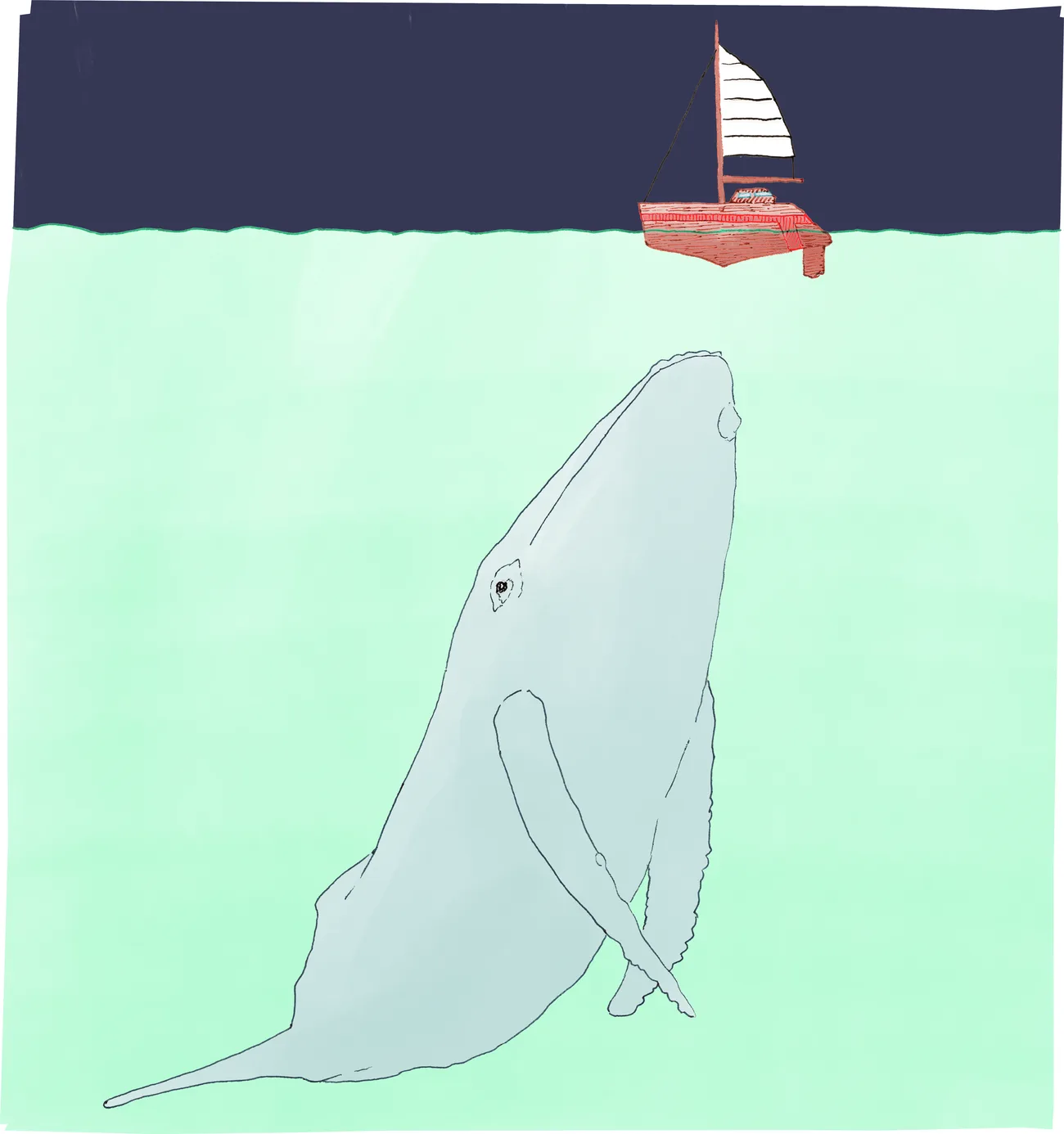
FLAT COLOR FIRST. THE CALM, BEFORE THE NOISE.
Then the brainbows. The customer's word for it, and the thing that makes the piece: a storm of color coming off the whale and up into the dark, like the inside of a thought. This is the layer that turned a nice drawing into the one they wanted on a shirt.
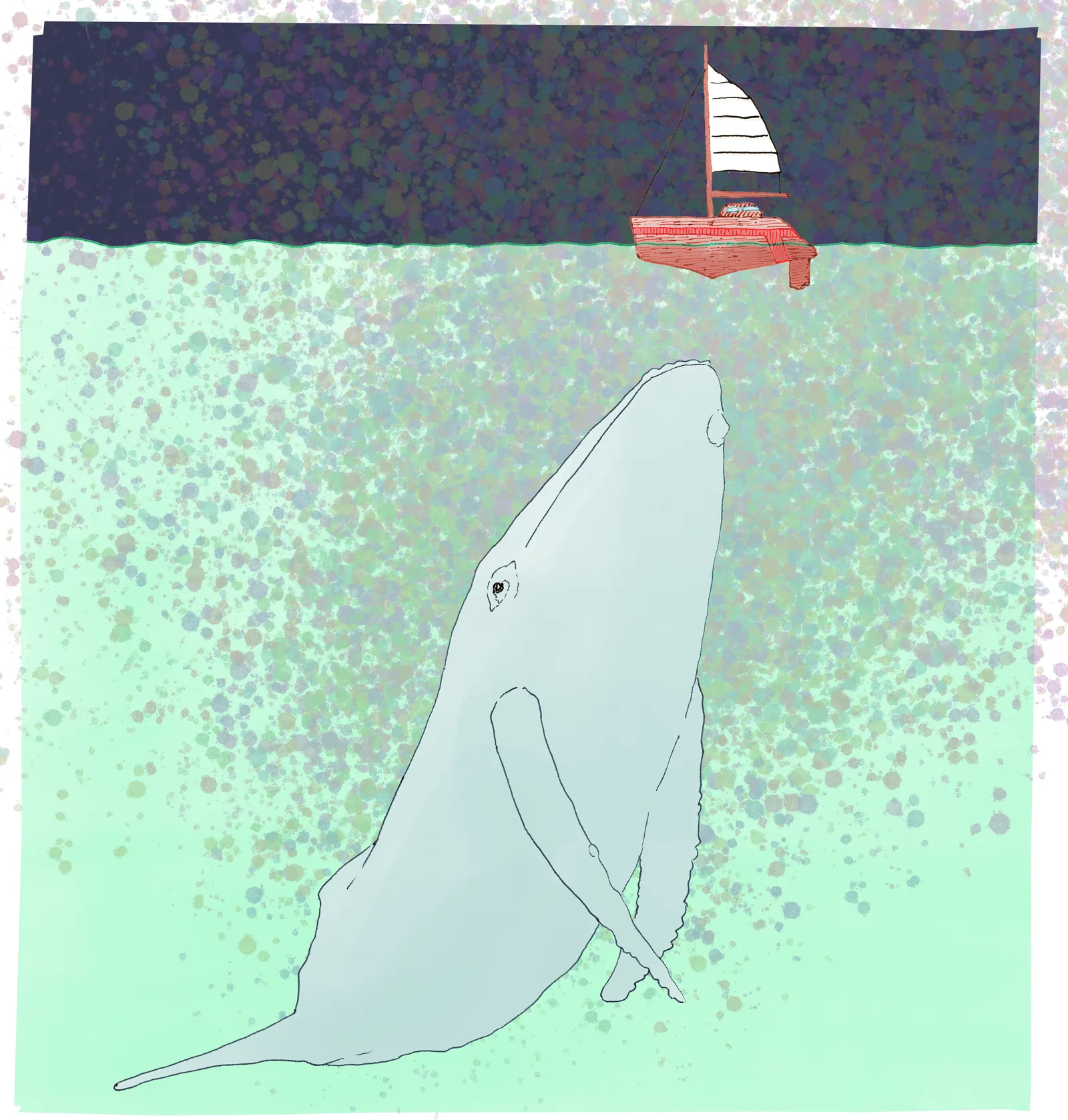
THE BRAINBOWS. THE LAYER THAT MADE IT THE ONE.
THE WORD THE CUSTOMER COULD NOT STOP SAYING IS THE LAYER THAT SOLD THE PIECE.
CUT AND LAID OUT IN ILLUSTRATOR
A sticker is not just art, it is art plus a cut. In Illustrator the finished image got its cut lines, its bleed, and its layout: how it sits on the sheet, where the kiss cut goes that frees each sticker from its backing, where the perf goes that tears one sheet from the next.
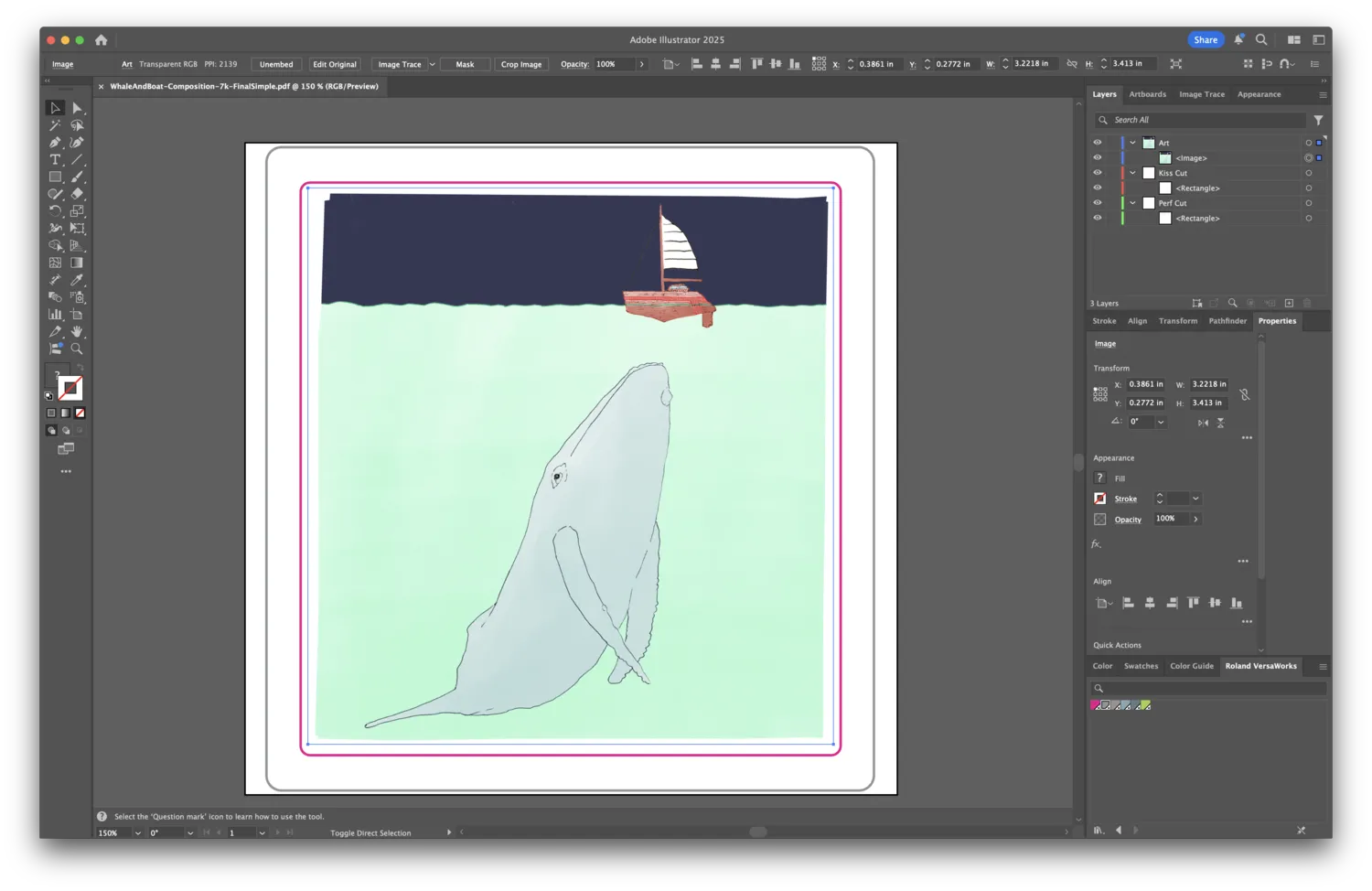
THE ART, PLUS THE CUT. A STICKER IS BOTH.
PREPRESS AND COLOR MATCHING
Then the unglamorous part that decides everything: prepress. Matching what the screen promised to what the ink can actually do, with color profiles for the specific media, so the mint reads as mint and the brainbows do not go muddy coming off the roll.
MATCHING THE SCREEN TO THE INK, SO THE MINT STAYS MINT.
THE RUN: PRINTED AND CUT
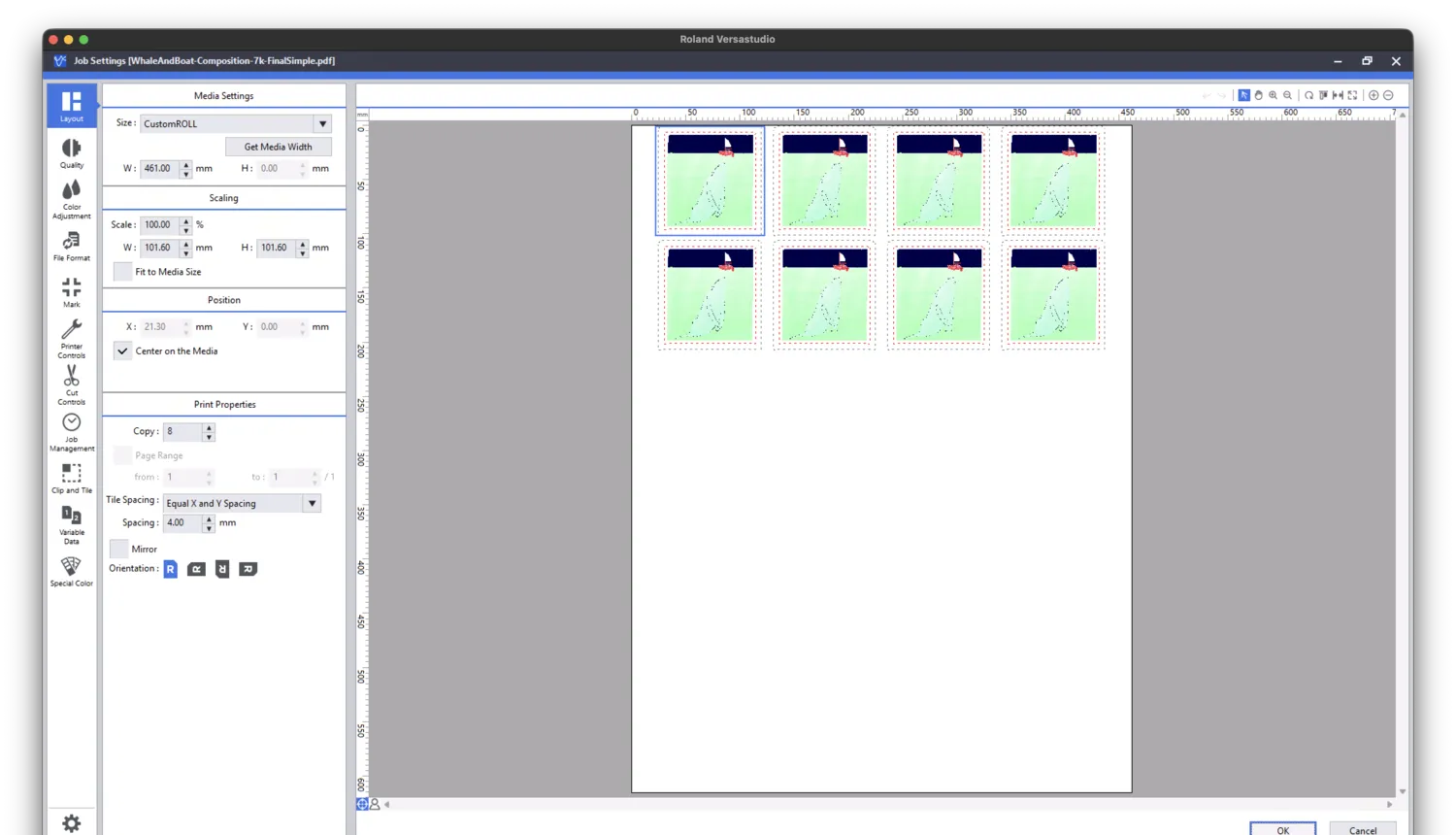
Color-managed and tiled, the job went to the RIP and then to the machine: a Roland that prints and cuts in one pass. Eight up, on vinyl, kiss cut so each sticker peels clean and perf cut so the sheets tear apart by hand.
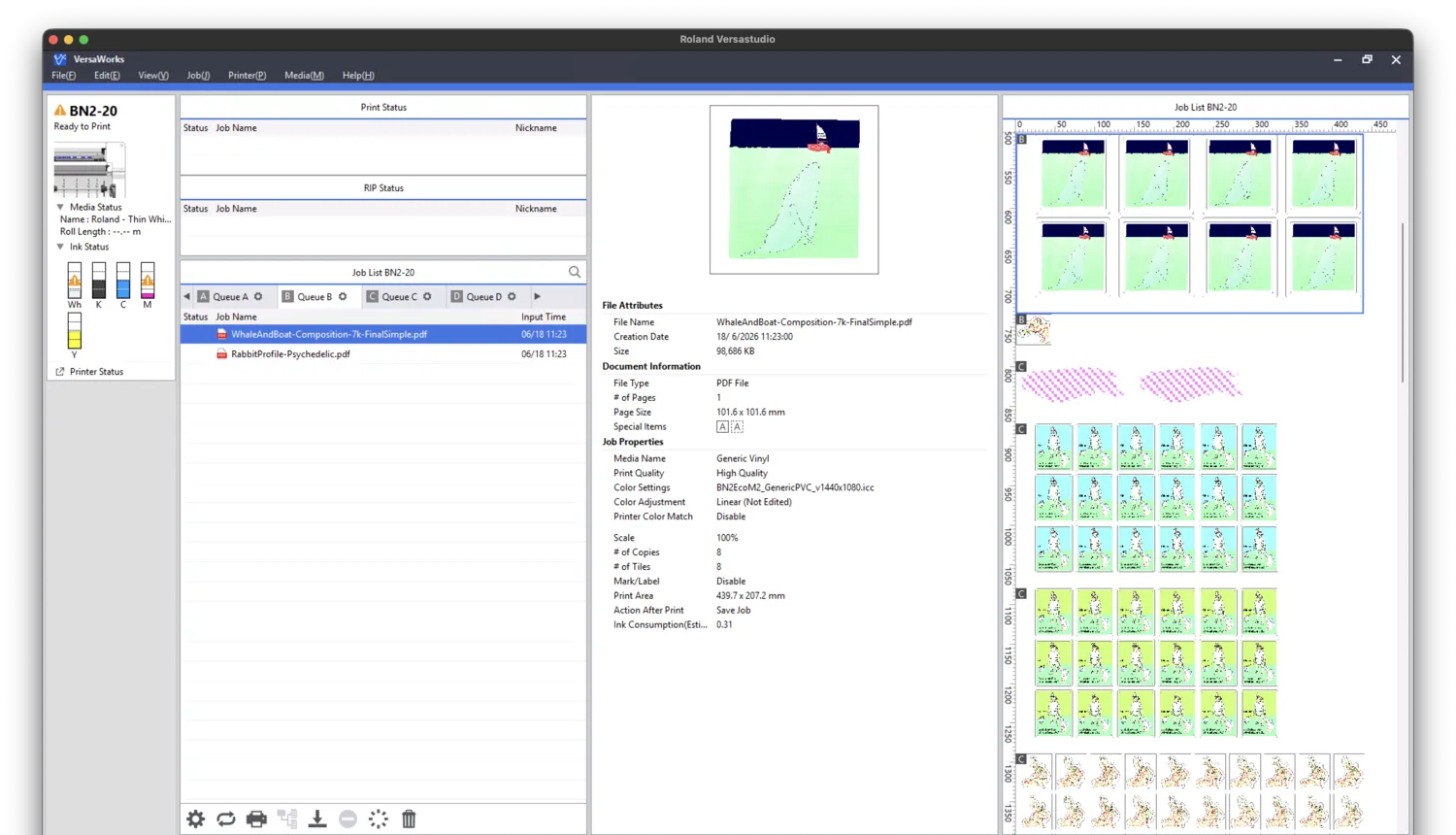
COLOR-MANAGED, TILED, AND QUEUED FOR THE RUN.
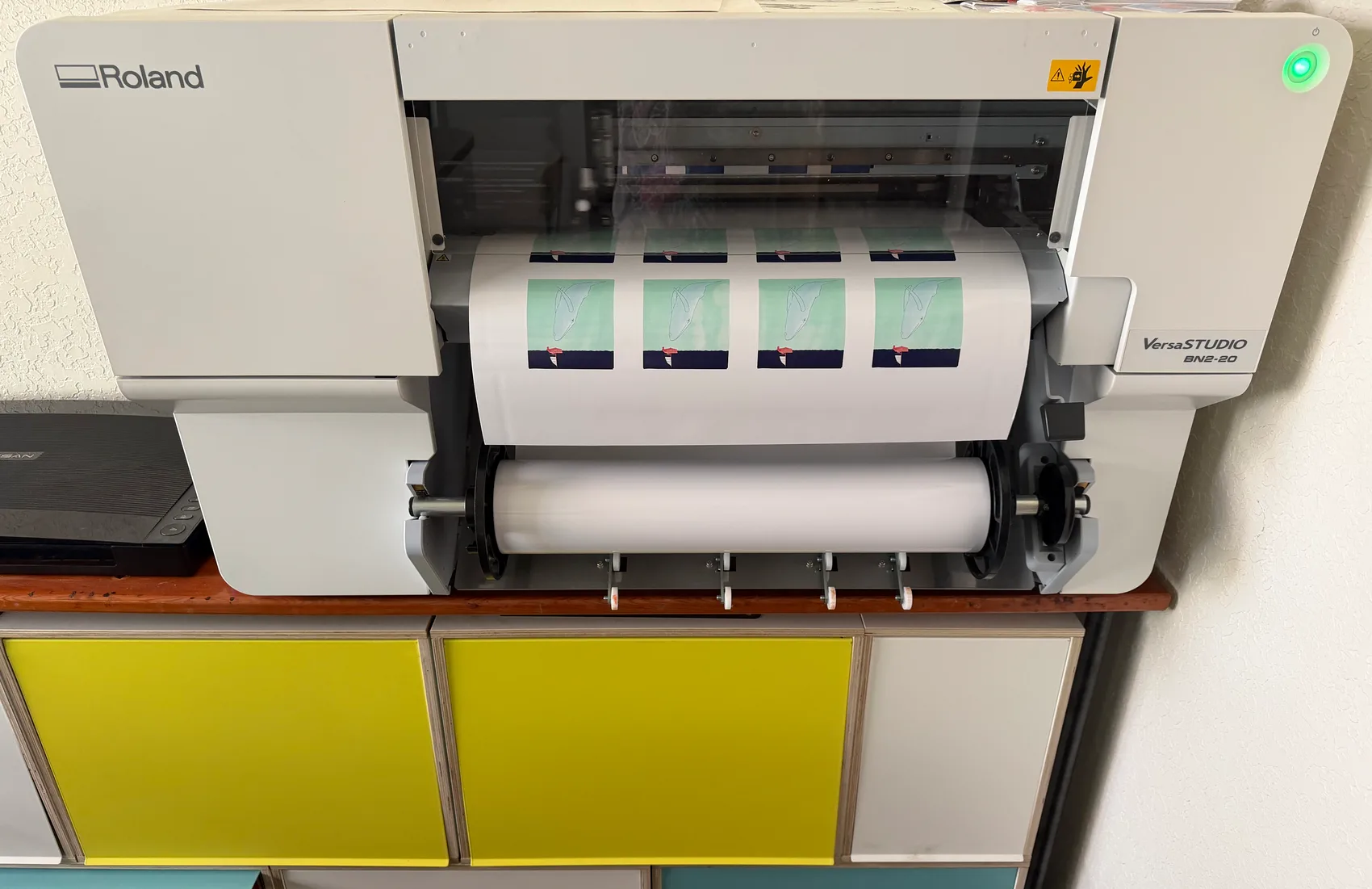
THE ROLAND PRINTING AND CUTTING THE RUN IN ONE PASS.
THEN THEY WANTED A SHIRT
The customer saw the stickers and immediately wanted the whale on a shirt. Same artwork, new substrate: the composition got laid out again for apparel and sent back through the same print and color pipeline. The brainbows that worked at sticker scale had to hold up at shirt scale too, and they did.
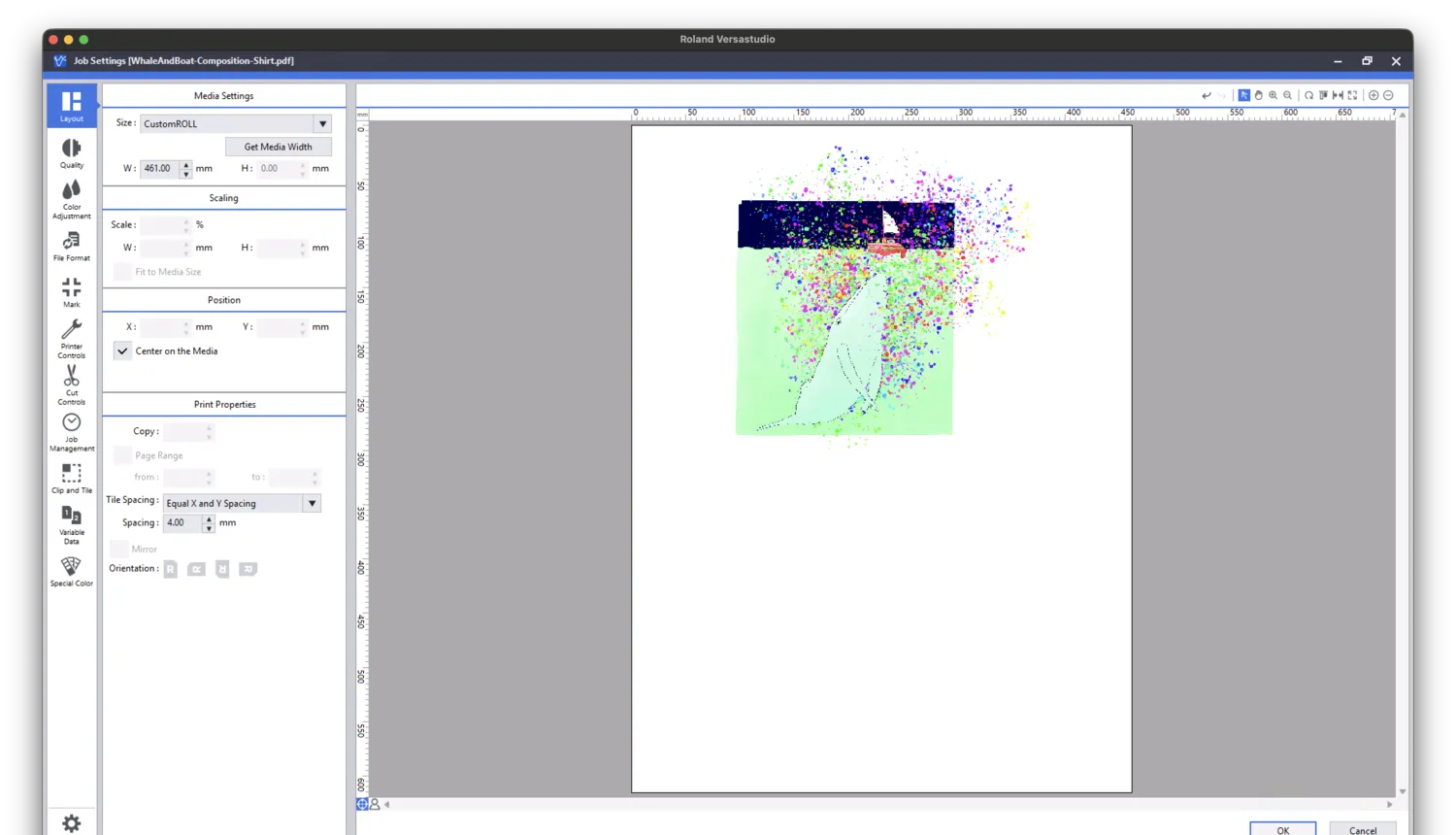
THE SAME WHALE, RELAID OUT FOR A SHIRT THE MOMENT THEY ASKED.
AND THE RECORD KEPT ALL OF IT
Look back at the photo at the top of this sheet. The stickers, the shirt, the notebook one landed on, all of it traceable to two words a customer said out loud. The brief, the references, the cafe sketch, the approved comp, the flat color, the brainbows, the cut file, the color profile, the run. Not one of them lost. That is a plan sheet: not a queue that forgets, a sheet that remembers.
TWO WORDS, A SKETCHBOOK, AND A FULL PAPER TRAIL TO THE SHIRT.
AND ALL OF IT LIVES IN PLANSHEET
Every artifact above was tracked in Plansheet the whole way, in the shop's own words. A sticker studio's plan sheet calls a vision a Concept, a module a Collection, a routine a Walkthrough. Same tool, relabeled for the craft. Here is the whale job as Plansheet held it.
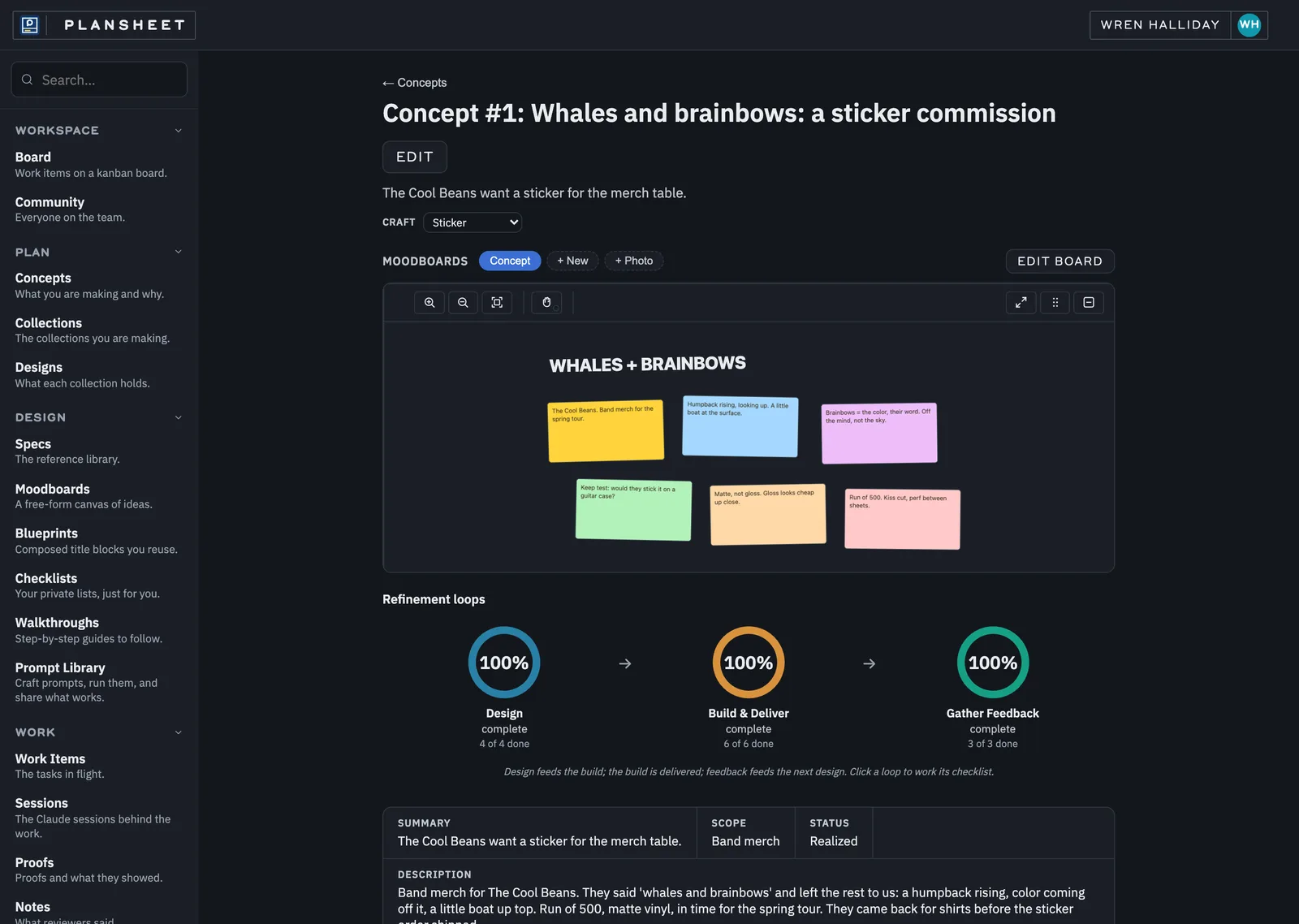
THE BRIEF BECAME A CONCEPT. THE ROUGH THINKING IS A WHITEBOARD ON IT. THREE LOOPS READ DONE.
The two words went on a page as a Concept. The rough thinking, whales and brainbows and the keep-test, sits on it as a whiteboard. Three refinement loops, design, build, and feedback, track the job, and all three read complete.
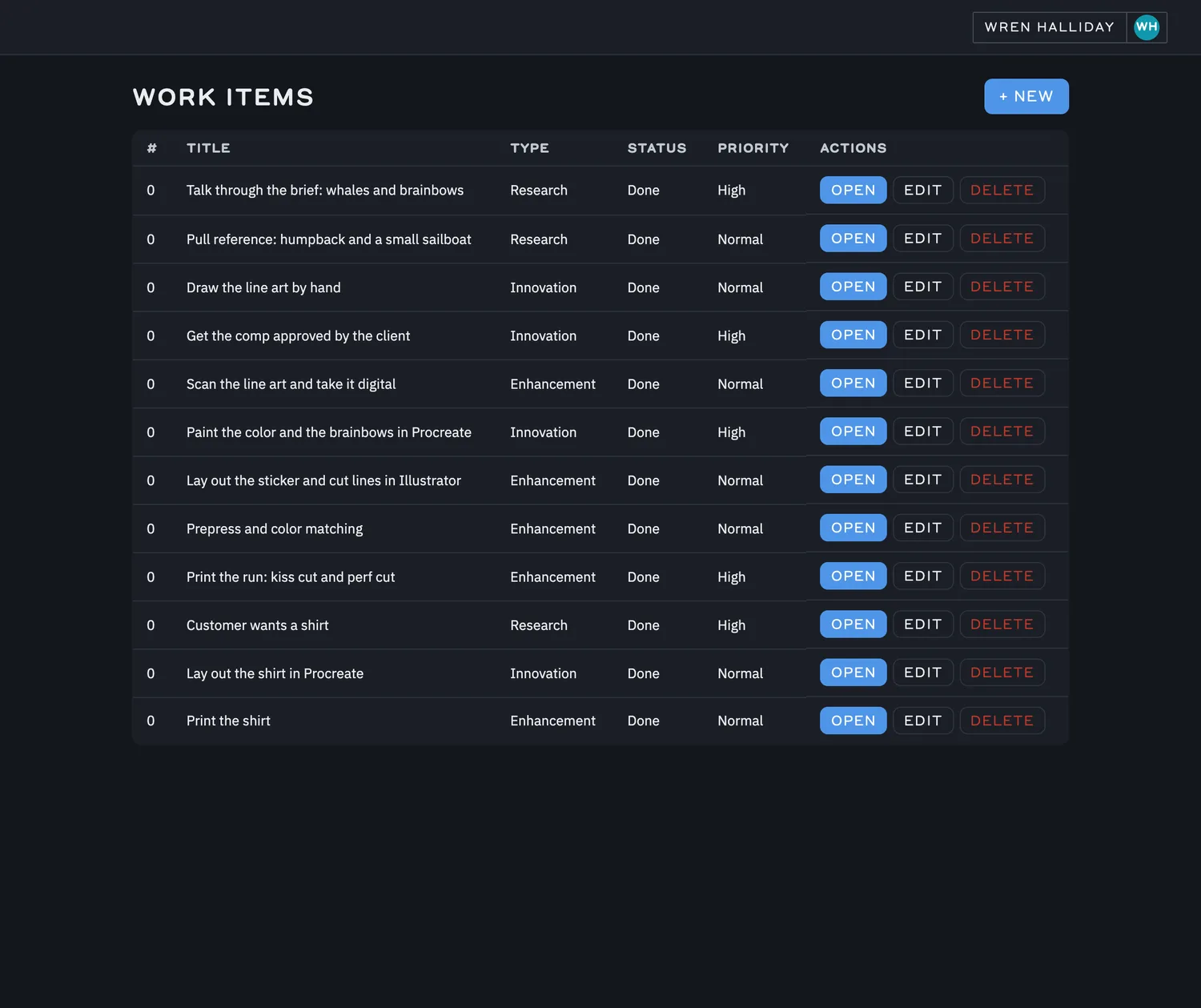
EVERY STEP YOU JUST SAW, AS A WORK ITEM.
Each step is a work item, typed and assigned: Wren draws, Cyrus prints. Nine on the sticker, three on the shirt, every one marked done and backdated to when it happened.
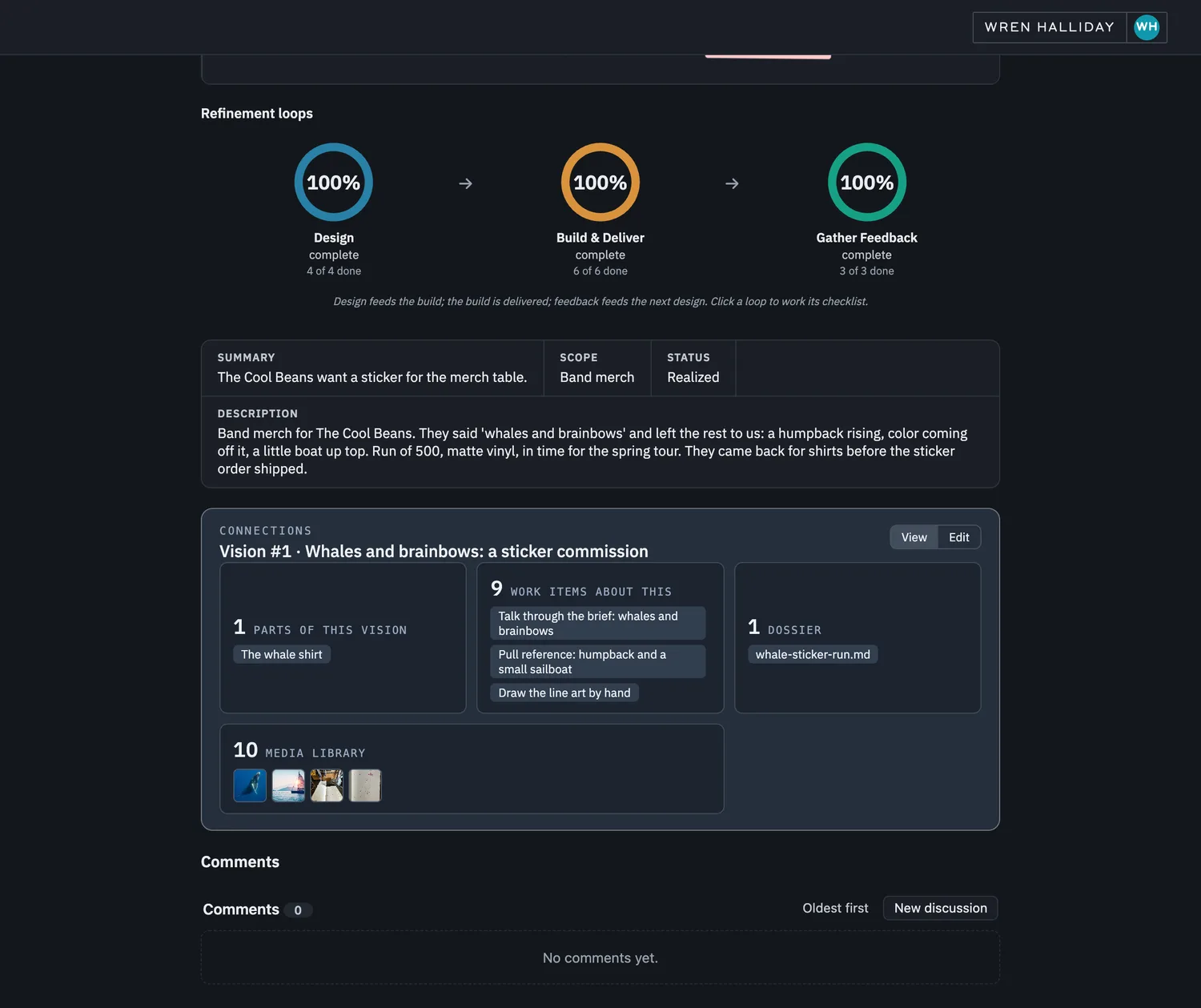
THE SHIRT, THE WORK, THE RUN HOW-TO, THE TWELVE PHOTOS: ALL ON ONE RECORD.
And it all links. The shirt is an extension off the commission. The work, the run how-to in the documentation library, and all twelve process photos hang off the one Concept. Nothing scattered across a drive and three inboxes.
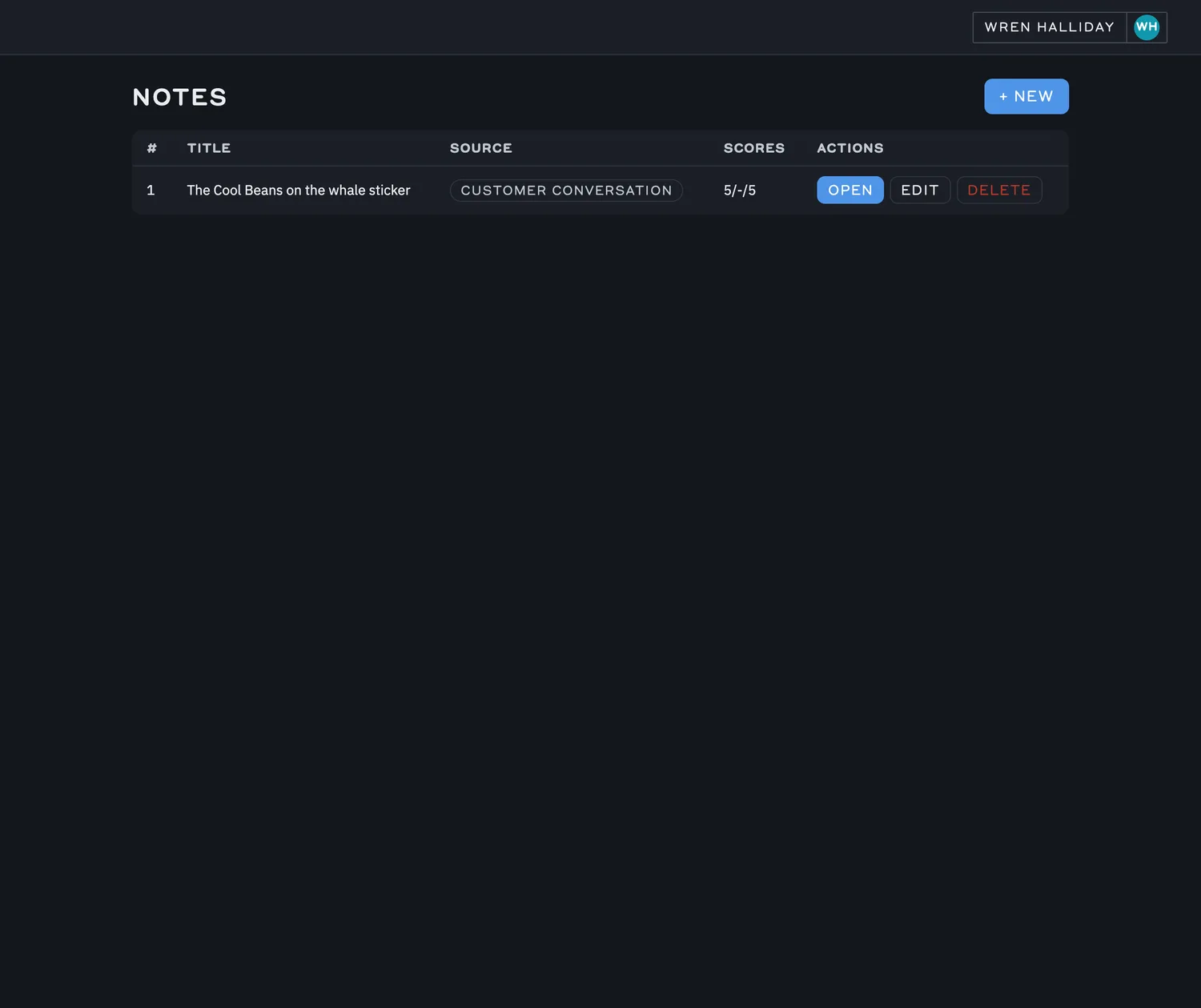
AND WHAT THE BAND SAID BACK, KEPT.
THE CRAFT IS THE ART. THE RECORD IS PLANSHEET.
THE SAME TABLE, ANY CRAFT
Nothing here is special to stickers. A record, a guitar pedal, a hardware build, a software release: each one starts as a few words, earns a drawing, gets checked, gets made, and drifts on its way to done. This whale started as pencil on a cafe table and ended on a shirt. The drafting table never asked what you were making. Neither does this one.
DRAFT YOUR NEXT COMMISSION
Whatever you make, put it on a sheet first. Keep every step, from the first two words to the last print.
START DRAFTING BACK TO THE EXAMPLES